

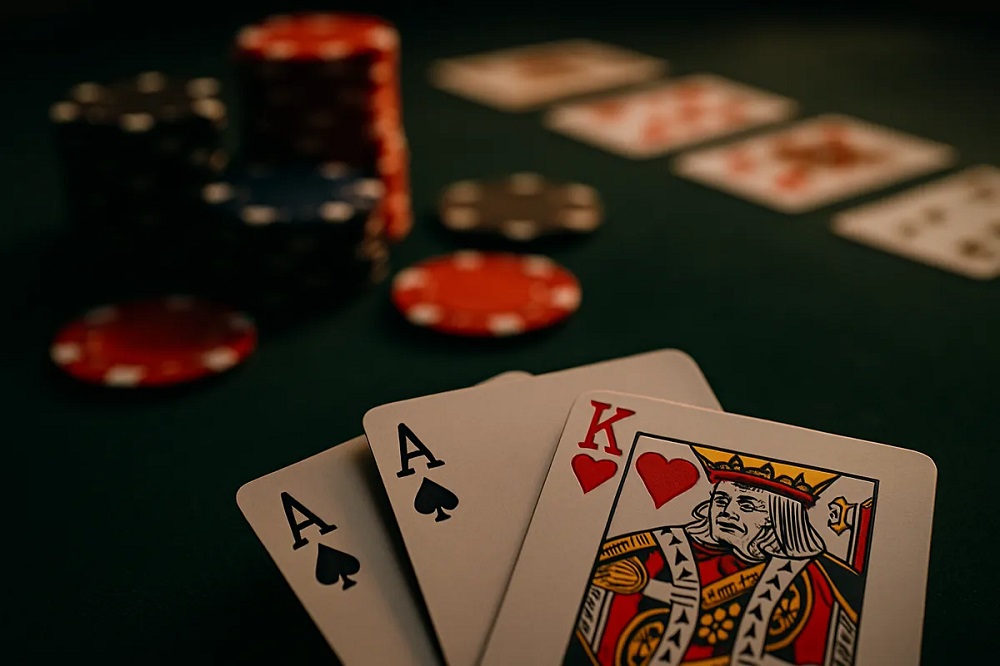
Card games have captivated human civilizations for centuries, transcending cultural boundaries and generational divides. From the smoke-filled salons of nineteenth-century Europe to modern international esports arenas, these games remain a staple of human recreation. The enduring popularity of card games does not rely on flashy graphics or physical athleticism. Instead, it stems from a masterfully engineered internal architecture that balances three core pillars: human skill, mathematical probability, and psychological entertainment.
When a game leans too heavily into pure skill, it risks becoming cold, predictable, and intimidating to newcomers, much like chess. If it relies entirely on luck, it turns into a thoughtless exercise akin to a lottery, losing its long-term replay value. The magic of card gaming lies in the sweet spot where these forces collide, creating a dynamic environment where an underdog can beat a grandmaster on any given day, yet expertise consistently triumphs over a significant sample size.
The Spectrum of Determinism
To understand how game designers strike this delicate balance, it helps to analyze games through the lens of determinism. A game is perfectly deterministic if it contains zero hidden information and zero elements of chance. In such environments, the player who calculates the most moves ahead will win every single time.
Card games purposefully reject perfect determinism by introducing a physical mechanism: the shuffled deck. Shuffling creates what game theorists call imperfect information. Players know the composition of the deck as a whole, but they do not know the exact order of the cards, nor do they know what their opponents are holding. This simple restriction changes the player’s cognitive task from calculation to risk management and psychological deduction.
The Role of Skill in an Imperfect System
Skill in card games manifests differently than in pure strategy board games. Because players operate in a fog of war, skill is measured by a participant’s ability to maximize their returns when dealt a strong hand and minimize their losses when dealt a weak one.
-
Strategic Resource Management: Many modern card games require players to manage finite pools of resources, such as mana, energy, or economic chips. Deciding when to hoard resources and when to spend them to gain positional advantage is a foundational skill.
-
Information Gathering and Deductive Reasoning: Top-tier players closely track visible indicators. In games like bridge or spades, this involves remembering which cards have already been discarded. In trading card games, it involves analyzing an opponent’s available resources to deduce what options they might be holding in their hand.
-
Adaptability and Tactical Flexibility: A skilled player does not lock themselves into a single rigid game plan. They constantly reassess their win conditions based on the changing board state and the unpredictable nature of the draw.
The Mathematics of Chance and Probability
Probability serves as the engine that drives a card game’s tension. Every time a card is drawn, the structural landscape of the game shifts. Designers must calibrate the deck composition to ensure that probability creates exciting gameplay rather than immense frustration.
The Variance Factor
In mathematics and game design, variance measures how far a set of random outcomes deviates from the expected average. Card games intentionally introduce variance to flatten the skill gap over the short term.
Consider a standard fifty-two-card deck. The exact mathematical probability of being dealt a specific opening five-card hand can be calculated precisely using combinatorics. Over ten games, a novice player can catch a wave of positive variance—colloquially known as a heater or a run of good luck—and defeat a seasoned veteran.
This variance is essential for the survival of the game. It provides casual participants with the psychological validation of victory, keeping them engaged. However, over a large sample size of thousands of hands, the variance flattens out, and the mathematical edge of the skilled player asserts itself, ensuring that competitive integrity remains intact.
Expected Value Calculations
Advanced card players rely heavily on the concept of Expected Value, which represents the average amount a player can expect to win or lose per bet if an identical situation is repeated thousands of times. The calculation balances the probability of winning against the size of the payout:
When the result is greater than zero, the move is mathematically correct, regardless of whether the immediate outcome of that specific hand results in a loss. Mastery of this concept turns chance from an uncontrollable chaotic force into a manageable asset.
Crafting the Entertainment and Psychological Experience
While skill and mathematics provide the underlying structure, entertainment value dictates whether a game is actually fun to play. Game designers look beyond the numbers to create engaging emotional loops.
The Illusion of Control and Agency
A key element of game entertainment is ensuring that players always feel like their decisions matter. If a player loses a game and feels there was absolutely nothing they could have done differently, they experience frustration.
To combat this, successful card games offer players high agency. Even if the cards they draw are mathematically inferior, giving the player choice—such as choosing which card to discard, which lane to attack, or when to pass—creates a psychological sense of ownership over the outcome. When they lose, they can look back and analyze their tactical decisions rather than simply blaming the deck.
High-Stakes Tension and Close Finishes
The human brain craves drama, and card games are structurally optimized to deliver it through hidden information. The classic cinematic trope of a player waiting for a single specific card to complete their winning sequence relies entirely on probability.
Designers carefully tune the card pool to maximize these close finishes. If a game features too many sweeping cards that completely destroy an opponent with no counterplay, the entertainment value drops. The most memorable gaming sessions are those where the advantage swings back and forth like a pendulum, culminating in a dramatic final reveal.
Comparing Structural Frameworks
Different card game genres distribute the balance of skill, probability, and entertainment in unique ways to target specific consumer audiences.
The Evolution into the Digital Frontier
The rise of digital card gaming has allowed developers to push the boundaries of how skill and probability interact. In physical card games, probability is limited by what can be executed manually with a piece of cardboard. Digital platforms remove these physical constraints entirely.
Digital games can feature mechanics that generate entirely random cards from an infinite database mid-game, track hidden stats that scale over time, or introduce complex tracking systems that would be impossible to manage on a physical tabletop. While these features increase the entertainment factor and visual spectacle, developers must be careful. Injecting too much digital randomness can alienate competitive players who feel that strategic planning is being overridden by algorithmic chaos. The future of the medium relies on balancing these modern digital flourishes with the foundational principles of mathematical fairness that have governed card games for centuries.
Frequently Asked Questions
What is the difference between open information and hidden information in card games?
Open information refers to any element of the game state that is completely visible to all players, such as face-up cards on the table or the total number of items in a discard pile. Hidden information consists of elements wrapped in the fog of war, such as the specific cards currently held in an opponent’s hand or the exact sequence of the remaining deck. Hidden information is what allows for mechanics like bluffing, trapping, and unexpected tactical reversals.
How do designers prevent a single strategy from dominating a card game?
Designers utilize a concept known as a dynamic metagame, frequently issuing balance updates or card print adjustments. They intentionally create a rock-paper-scissors ecosystem where every dominant strategy has a built-in counter-strategy. If a specific deck or card combo becomes too powerful, players will naturally shift to its counter, keeping the competitive landscape balanced and preventing the gameplay from becoming stagnant.
Why do some card games use a drafting mechanic instead of dealing random cards?
Drafting mechanics, where players take turns picking individual cards from a shared circulating pool, are used to minimize extreme opening luck. Drafting injects a massive layer of skill into the early phase of a game, as players must analyze what cards their opponents are passing up, deny vital resources to competitors, and piece together a cohesive strategy on the fly rather than relying on a completely random deal.
What role does table talk play in the balance of skill and entertainment?
Table talk, or verbal table talk, introduces a purely psychological skill layer. In casual settings, it enhances the social entertainment value of the game. In competitive environments, it serves as a tool to manipulate an opponent’s perception of hidden information. Players use verbal cues, altered vocal tones, or strategic silence to project false confidence or weakness, bypassing the literal math on the table.
How does deck size impact the overall probability within a card game?
Deck size correlates with variance and consistency. A smaller deck size ensures that a player will draw their most critical, high-impact cards with high frequency, making the game highly predictable and reliant on optimal sequencing skill. A larger deck size dilutes the probability of drawing any single card, increasing game variance, forcing players to adapt to unpredictable draws, and creating varied game states.
What is the gambler’s fallacy and how does it affect card players?
The gambler’s fallacy is the erroneous psychological belief that if a specific random event has occurred more frequently than usual in the past, it is less likely to happen in the future. For example, a card player might assume that because they have drawn poor hands five rounds in a row, they are due for an excellent hand on the next draw. In reality, each shuffle resets the deck, and the mathematical probability remains identical, meaning past results have zero influence on future outcomes.